Please wait...

Disaster Management Training Programme

The Disaster Management Training Programme (DMTP) plays a key role in strengthening disaster risk management capacities across DPPI SEE member states. It supports the professional development of civil protection personnel through thematic workshops, seminars, conferences, simulation exercises, and expert exchanges. The DMTP addresses priority areas in disaster preparedness and prevention, while promoting alignment with EU, UN, and other international standards and practices. Developed in close cooperation with member states, the programme fosters knowledge sharing, regional coordination, and improved interoperability in emergency situations.
-

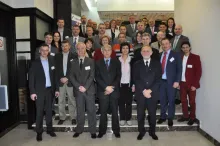
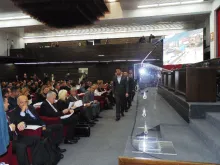
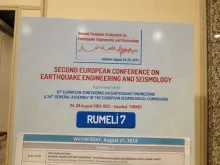
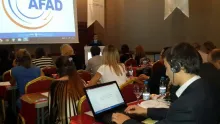
The Second European Conference on Earthquake Engineering and Seismology (2ECEES) was organized in Istanbul, Turkey, 25-29 August, 2014 as a joint event of European Association of Earthquake Engineering (EAEE) and European Seismological Commission (ESC). With support from Turkish Prime Ministry Disaster and Emergency Managment Agency (AFAD), the conference has also been included in the DPPI SEE Disaster Management Training Programme for the year 2014.


The purpose of the conference was to provide a platform for introducing and discussing Earthquake Engineering and Seismology along with priority issues of global importance. The conference was primarily aimed at civil engineers, geological and geophysics engineers.More than 1,200 people attended the conference. On the margines of the conference programme, a side meeting was organised by AFAD for representatives of 9 DPPI SEE member countries for purpose of strenghtening the collaboration related to seismic networks and relevant data sharing.
The following is the list of topics of the Second European Conference on Earthquake Engineering and Seismology (2ECEES):

  1. Seismicity of the European-Mediterranean Area
  2. Earthquake Source Physics
  3. Earthquake Forecasting and Prediction
  4. Engineering Seismology and Seismic Hazard Assessment
  5. Acquisition and Analysis of Strong Motion Data
  6. Microzonation and Site Effects
  7. Geotechnical Earthquake Engineering
  8. Earthquake Scenarios, Vulnerability and Loss Assessment Studies
  9. Seismic Design Code Developments and Related Issues
  10. Performance-Based Seismic Assessment and Design
  11. Seismic Analysis and/or Testing of Structural Elements and/or Systems
  12. Seismic Analysis and Design of Tall Buildings
  13. Seismic Analysis and Design of Bridges
  14. Seismic Analysis and Design of Underground Structures
  15. Seismic Analysis and Design of Marine Structures
  16. Seismic Analysis and Design of Foundation Systems / Soil-Structure Interaction
  17. Seismic Analysis and Design of Transportation and Lifeline Systems
  18. Seismic Analysis and Design of Active and Passive Structural Control Systems
  19. Seismic Performance of Historical Monuments and Structures
  20. Earthquake Risk Mitigation Policies and Methodologies
  21. Lessons from Recent Earthquakes

-

​The seminar was hosted by the Sector for Emergency Management of the Ministry of Interior of the Republic of Serbia within the Disaster Management Training Programme of the Disaster Preparedness and Prevention Initiative for South East Europe (DPPI SEE) as a Serbian contribution to the Programme for the year 2014.

The aim of the seminar was to share experiences and good practices, as well as to develop discussion during the seminar on aforementioned topic between representatives and experts from the DPPI SEE member countries with experiences in interventions caused by traffic and railway accidents.

Total number of participants at the seminar was 48; thereof 33 members of the Sector for Emergency Management accompanied by participants from Bosnia and Herzegovina (2), Bulgaria (2), Croatia (2), Macedonia (2), Slovenia (2), Montenegro (2), Medical emergency service (2) and Head of DPPI SEE Secretariat.

Based on the stated experiences the participants of the seminar have identified the basic problems and areas in need of improvement, similar to the whole region. The following is an excerpt from the list of identified areas:

  • Establishing of new procedures, revision and annex of the existing ones
  • Adjustment of the procedures in the region in accordance with European standards
  • The necessity to equipping the units with adequate equipment, especially tools with stronger cutting power
  • Improving coordination in joint action of all services, during mass disasters
  • Better communication and compatible communications system
  • Integration with the 112 System centers
  • Strengthening operational headquarters, as well as the procedures for mass casualty accidents management
  • Security of rescuers
  • Increasing the capacity of medical facilities related to triage, transport of the injured, marking of injured people (cards), development of databases, with an increased capacity of medical facilities
  • The engagement of international specialized teams
  • Defining responsibilities
  • Developing operational maps of the railway network, particularly for inaccessible entrances, tunnels, bridges and viaducts
  • Relations with the media
  • Psychological support to injured and rescuers
  • The need for modern specialist training
  • Preparation of detailed expert analysis of mass casualty events
  • Exchanging experiences and raise knowledge and skills at seminars, workshops and exercises

The seminar provided a unique opportunity for the government officials and experts from relevant Services for Civil Protection and Emergency Management and Red Cross to share knowledge and experience and to discuss good practices in drafting procedures for conducting the evacuation of people and animals, and therefore improve national ability to effectively respond to emergency situations of the kind.


-

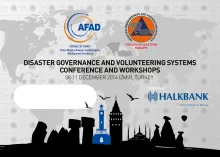
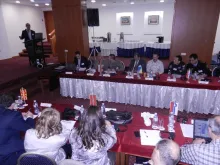
“Disaster Governance and Volunteering Systems - Conference& Workshops” was Turkish contribution to the Disaster Management Training Programme (DMTP) for 2014 and was hosted by the Republic of Turkey Prime Ministry Disaster and Emergency Management Presidency (AFAD)

As widely known, no matter how successful a country’s disaster preparedness may be, the building of safe ​settlements, mitigation of risks and prevention of probable disaster damages are fundamentally important.  To reach the disaster victims as soon as possible and rescue them following the occurrence of disasters is the universal main objective. The existence of a common language and a healthy coordination enables faster and more efficient advancement for search and rescue operations. While recognising the differences in disaster governance and volunteering systems of the DPPI SEE member countries, through its two-fold programme, the event provided ample opportunity for observing the present disaster governance set-up in the DPPI SEE arena through presentations on related topics as well as through active discussions as part of thematic workshops.

The upload of Event Report for “Disaster Governance and Volunteering Systems - Conference& Workshops”, including conclusions and recommendations, is pending.

Image Gallery


The “Conference – Establishment of the National Platform for Disaster Risk Reduction” was Montenegrin contribution to the DPPI SEE Disaster Management Training Programme (DMTP) and was hosted by the Directorate for Emergency Management of the Ministry of Interior of Montenegro and co-organised by UNISDR Europe Region Office.

The aim of the event was to establish the National Platform for disaster risk reduction in cooperation with other relevant state ministries, agencies and administrations and local authorities, and with the presence of the DPPI SEE member countries and international organisations with experience in disaster risk reduction, through information exchange on best practices and lessons learned in the filed of establishing and maintaining the work of the national platforms for disaster risk reduction.

​The conference was attended by over 170 participants from different Montenegrin ministries and other governmental institutions and agencies. In addition, 10 experts form 6 DPPI SEE member countries (Bulgaria, Croatia, Macedonia, Serbia, Slovenia and Turkey) contributed to the conference programme.

Detailed information on the conference can be found in the Event Report


-

The seminar was hosted and organised by the Sector for Emergency Management of the Ministry of Interior of Serbia.

he overall aim of the seminar was to provide an opportunity for the DPPI SEE Parties to exchange experiences of their respective countries in planning of an organized local authority response to floods, flash floods and earthquakes, knowing the first impact of disasters was always at the local level. Views and opinions were also shared as regards the required level of training and equipment necessary for local-level stakeholders and responders, including that for competent services engaged in preventive and operational activities.

Twenty-two (22) experts participated in seminar, out of which thirteen (13) of them from the participating DPPI SEE Parties (Albania, Bulgaria, Bosnia and Herzegovina, Croatia, Macedonia and Montenegro), eight (8) Serbian representatives and one (1) expert from the Danish Emergency Management Agency (DEMA). Traditionally, Mr. Predrag Maric (Serbian Head of Sector) gave opening remarks on day 1. The Head of the Secretariat attended the seminar in the afternoon of day 1 and for the whole duration of day 2.

The seminar was organized as a plenary session on the day 1 and as a workshop on day 2. Target audience included managers and experts of the national and local protection and rescue services involved in the development of emergency response plans. The plenary session was dedicated to country presentations followed by related discussions where different aspects of the disaster response planning were addressed and then used as the platform for problem-analysis and drawing of relevant conclusions & recommendations. The workshop discussion on day 2 focused on brainstorming on the sub-topics that as part of the seminar agenda were communicated to the participants in advance (plan-development methodology, solutions for strengthening the capacities through involvement of different stakeholders in the planning process, funds needed for implementing the plans, control and assessment of implementation, etc.).

The seminar was evaluated by the participating DPPI SEE Parties’ as being highly informative and of relevance to the agendas of future similar events in the DPPI SEE annual programmes. 


-

The seminar was hosted and organised by the Directorate for Emergency Management of the Ministry of Interior of Montenegro.

The seminar aimed to provide an opportunity for exchange of experiences and best practices among experts from the DPPI SEE Parties state institutions with roles and responsibilities in drafting and/or implementing laws and regulations governing the transport of dangerous goods by road in their respective countries, including in the implementation of relevant control mechanisms to prevent accidents and damage to persons, property and environment. 

Topics addressed through country presentations and follow-up discussions were: road transport of explosives, radioactive, chemical and toxic substances as well as testing of vehicles carrying dangerous goods and most importantly - national legislations regulating issuance of permits for transportation of dangerous goods – classes 1, 6 and 7. While discussing the current status of development and challenges faced in the application of related respective laws and by-laws, the participants also observed to what extent these laws had already had incorporated relevant EU directives and what was the estimation of their impact on national regulations. Necessity to establish effective information-management and data-flow between competent institutions at the national and regional level respectively was also emphasised as a pivotal point in the overall discussion.

In addition to eleven (11) Montenegrin experts in the field, equal number of representatives of other five (5) DPPI SEE Parties participated in the seminar (Albania, Bosnia and Herzegovina, Bulgaria, Croatia, Macedonia and Serbia). For its whole duration the seminar was also attended by Mr. Mirsad MULIC, the Montenegrin Director General. The Head of the Secretariat joined the participants at the end of day 1 and observed the seminar until end of day 2.

The seminar undoubtedly proved the importance and value of a quality expert discussion on emergency management related issues. The eligibility criteria in nominating their respective representatives was fully respected by all the participating DPPI SEE Parties.


-

The seminar on “International Cooperation in Case of Emergencies – Host Nation Support”, hosted by the Sector for Emergency Management of the Ministry of Interior of the Republic of Serbia, represents Serbian contribution to the DPPI SEE Disaster Management Training Programme for 2015.
 
In recent years the region of the South Eastern Europe has witnessed a major growth in the scale and frequency of natural disasters which from the onset emphasized the importance of a rapid and effective response, including of a well-coordinated reception of requested international assistance and distribution of the humanitarian aid to the affected population. 

Under the seminar’s main topic, civil protection authorities and experts, as well as competent representatives of other stakeholders organisations engaged in the overall support to the government in the HNS, shared their national experiences in sending and receiving international assistance, including about the on-going processes to review the countries’ domestic frameworks for international response while outlining their legally binding frameworks for international disaster response operations.

Also shared experience in provision of HNS was that of Italy through presentation of the Italian Civil Protection Department representative. At the end of the seminar, conclusions and recommendations were drafted by a host.


-

Threats and dangers that Chemical, Biological, Radiological and Nuclear (CBRN) materials pose are a challenging issue to be handled by all countries. CBRN substances can be deliberately and accidently released to the environment. Moreover, political disturbances and developing industrial activities increase the risk of release of those substances. CBRN incidents can result in economic, political and social losses at national and global level and can cause severe permanent damage to environment and human health.

The event, hosted by the Republic of Turkey, Prime Ministry Disaster and Emergency Management Presidency (AFAD) as one of the Turkish contributions to the DPPI SEE Disaster Management Training Programme for 2015, aimed to provide an opportunity for information exchange among the DPPI SEE member countries on best practices and lessons learned in the area of CBRN preparedness, response and recovery activities including about related education, training, public awareness, etc. 

​Target audience of the event were CBRN specialists, first responders, instructors/trainers, or professionals involved in developing CBRN emergency-response system in their countries. 

Within the seminar part, country presentations were expected to inform about their respective national CBRN management systems, such as: 

  • CBRN emergency management planning (organizational structure, CBRN teams structure)
  • Standard operation procedures of CBRN incident response (surveillance and reconnaissance, detection, sampling, search and rescue, decontamination) 
  • Practical and theoretical training activities 
  • Public awareness and communication activities
  • Early warning systems

Workshop, on the other hand, aimed at identifying the key differences between the participating countries’ CBRN governance systems thereby forming the basis for discussion on the importance of establishing a common language in the region of the South Eastern Europe.

In addition to a number of AFAD’s representatives, 11 participants from six (6) other DPPI SEE member countries (Albania, Croatia, Macedonia, Montenegro, Serbia and Slovenia) took part in the event.


-

The seminar programme was hosted and organized by the Republic of Turkey Prime Minister's Office Disaster and Emergency Management Presidency as a Turkish contribution to the DPPI SEE Disaster Management Training Programme 2011.

Seminar Objectives

At the seminar the participants gained theoretical knowledge such as creating financial sources inventory, specifying the deficiencies, ensuring the applicability of plans with trainings and practices, identifying resources that would be useful to return to normal daily lives and finding and allocating extra financial resources in case of a need.

Target Audience

The seminar was intended for experts and professionals in administration and financing from DPPI SEE countries (1-2 per country).

Methodology

The seminar was implemented as a combined structure of theoretical lectures and supervised by the academic community and experts of the issue. Content of the seminar programme was prepared by the experts in Disaster and Emergency Management Presidency.


-

This seminar was hosted and organized by the Republic of Turkey Prime Minister's Office Disaster and Emergency Management Presidency as a Turkish contribution to the DPPI SEE Disaster Management Programme 2012.

Seminar Objectives

In this seminar, experts and field practitioners from governmental and nongovernmental organizations and academicians having different backgrounds from South Eastern European countries were brought together to share ideas and experiences. The purpose of this seminar was to reveal previous disaster training activities and projects at national and international level to set examples for future training organizations especially for vulnerable groups. Moreover, the seminar provided opportunity to discuss advantages and disadvantages of the methods of the trainings aiming to reach different vulnerable groups and elaborate upon ways to eliminate these disadvantages. Also, the seminar raised awareness of experts who worked for foreign regions with different levels of socio-cultural structures.

Target Audience
The seminar tartgeted experts and professionals specialized in the field of disaster training from DPPI SEE Parties and was attended by representatives of Albania, Bosnia and Herzegovina, Bulgaria, Croatia, Macedonia, Moldova, Romania, Serbia, Slovenia and Turkey.
 
Methodology
The seminar was implemented as a combined structure of lectures composed of theoretical knowledge with field examples and supervised by experts and field practitioners from governmental and nongovernmental organizations and academicians from the related field. Furthermore, this seminar provided a platform for sharing experiences of the participants with different academic and socio-cultural backgrounds from South Eastern Europe countries.


The programme of the seminar was prepared by the Disaster and Emergency Management Presidency relevant experts. 

-

The seminar was hosted and organised by the Protection and Rescue Directorate of Macedonia and represented Macedonian contribution to the DPPI SEE Disaster Management Programme 2012.   The aim of the training was to gain theoretical knowledge and basic practical skills in the field of using GIS and other computer simulation tools for planning protection and rescue operations.The training therefore improved the participants’ knowledge of basic skills and techniques of using GIS and other computer simulation tools for planning protection and rescue operations.  


-

Background

 Disasters affect the development all around the world and this makes disaster management one of the most important topics of the governments all over the globe. Between 2002 and 2011, there were 4.309 disasters recorded, resulting from natural hazards around the world where 1.124.854 people perished and a minimum of 1.313 billion USD was recorded in losses. In the year 2011 alone, 365 disasters claimed 33.760 lives; affected 206 million people and inflicted damages worth an estimated 366 billion USD.

 In order to manage the disasters effectively at all phases from disaster risk reduction to recovery, the direct, indirect and secondary effects of the disasters should be assessed in detail. All these effects are directly related to the economic growth of the affected country, mostly as an economic loss in the short run and rarely as an economic gain opportunity in the long run.

 On the other hand, there is a wide range of funds and financial resources that the stakeholders can benefit from during the disaster management process especially for disaster reduction projects and disaster relief operations. Furthermore, the disaster insurance that bears the cost of losses and damage caused by the disasters can/would have an important economic effect for the country in the recovery period.

 Seminar Objectives

 The Symposium was hosted by Disaster and Emergency Management Presidency of Republic of Turkey (AFAD) and was organized in cooperation with Economic Cooperation Organization (ECO) and Disaster Preparedness and Prevention Initiative for South Eastern Europe (DPPI SEE).

In this symposium, in order to form an economic view of disasters, all the following issues were covered: economic effects of disasters, sustainable development, pre-disaster finance, disaster insurance and financial resources for disaster management.

The symposium aimed to:

  • Inform the participants about the economic effects of disasters and the relationship between disasters and sustainable development.
  • Raise the awareness about the importance of pre-disaster finance especially the disaster insurance.
  • Enlightened the participants about the financial resources for disaster management and emergency relief.
  • Provide the participants with an opportunity to come together to create a network, to share experience, exchange know-how and learn different implementation methods.

Target Audience and Methodology

An international arena was created with participation of disaster management and finance experts and economists from 20 countries and Turkey as a bridge country between Europe and Asia.  Academicians, representatives of UNDP, UNISDR, UN OCHA, Swiss Re, Turkish DASK, World Bank, Islamic Development Bank, European Union, public sector, private sector and NGO’s were invited as lecturers. Also, the representatives of other regional organizations were invited as observers.

Language

The language of the symposium was English and no translation was provided. Working documents and handouts were also distributed in English.

About the Co-organizer

Economic Cooperation Organization (ECO) is an intergovernmental regional organization established in 1985 by Iran, Pakistan and Turkey for the purpose of promoting economic, technical and cultural cooperation among the Member States.

In 1992, the Organization was expanded to include seven new members, namely: Islamic Republic of Afghanistan, Republic of Azerbaijan, Republic of Kazakhstan, Kyrgyz Republic, Republic of Tajikistan, Turkmenistan and Republic of Uzbekistan.

Over the past 12 years the member states have been collaborating to accelerate the pace of regional development through their common endeavors. ECO has embarked on several projects in priority sectors of its cooperation including energy, trade, transportation, and agriculture and drug control.

Under the Directorate of Human Resources & Sustainable Development, the natural disaster management issue is covered.

Presentations:


-

Regional Conference on Urban Security - Adriatic City Security – SIGG 2014 took place in the Le Meridien Lav Hotel in Split, Croatia, from 19 to 21 March 2014. The conference was organized by Security (Zaštita) Magazine (Tectus Ltd. Company) and the Croatian Network of Urban Security Stakeholders (CNUSS) under the auspices of the Ministry of Interior of the Republic of Croatia and the City of Split in cooperation with the Croatian Security Association, National Protection and Rescue Directorate (DUZS) and Association of Cities.
 
The main objective of the conference was to provide an international perspective to the security topics in order to bring together European security experts to share their expertise and findings with the cities of the region. The Conference was intended for mayors, deputy mayors, cities' safety and security managers, local authorities and government, county managers, deputy county managers, county safety and security managers, directors and management of all businesses that take part in the national security structure, directors and representatives of companies for physical and technical protection, presidents and members of the Council for Prevention and all security managers and experts.

Expert topics of the sixth annual SIGG conference were crime prevention, civil and crisis city management, new technologies in city security implementation, European experiences and environment protection as a part of city security.
 
The conference provided also a unique opportunity to government officials and experts from relevant ministries and departments (Civil Protection, Ministry of Interior) to share knowledge, exchange experience and discuss good practices in risk reduction, with a focus on urban security.
Moreover, organised within the DPPI SEE Disaster Management Training Programme for 2014, enhancing the dialogue, communication and networking between the government officials and experts, the Conference contributed to better regional cooperation on issues related to urban security.


-

The seminar was Serbian contribution to the DPPI SEE Disaster Management Training Programme for the year 2014 and was hosted by the Sector for Emergency Management of the Ministry of Interior of the Republic of Serbia.
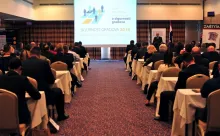
 
Representatives from eight countries of the region – Albania, Bosnia and Herzegovina, Bulgaria, Croatia, Macedonia, Montenegro, Slovenia and Turkey, as well as representatives of the Red Cross Serbia.
 
The main objective of the activity was presenting the place and role of Specialized Civil Protection Units in the organisation of mass evacuation and shelter provision for the affected population in case of an emergency in the Republic of Serbia and countries in the South East European Region.
 
During the seminar each participating country shared its practices and lessons learned in creating the resettlements and evacuation coordination of the affected population, based on positive experiences of their country. This was accomplished through presentations of all participating countries on drafting and implementing the legal regulations in this filed and through discussions on mass evacuation and sheltering of the emergency affected population and developing evacuation plans in case of emergencies.
 
The seminar provided a unique opportunity for the government officials and experts from relevant Services for Civil Protection and Emergency Management and Red Cross to share knowledge and experience and to discuss good practices in drafting procedures for conducting the evacuation of people and animals, and therefore improve national ability to effectively respond to emergency situation.


-

This seminar was Serbian contribution to DPPI SEE Disaster Management Training Programme for 2019 and as such it is the last event in the year. Organized by the Sector for Emergency Management of the Ministry of Interior of Republic of Serbia, the overall aim of the seminar was to exchange experiences and lessons learned between DPPI SEE participating states on the topic of Planning of protection and rescue activities in emergency situations - elaboration of National plans. Discussions during the seminar covered topics such as development of risk assessments, national emergency plans and different methodologies used for that process, as well as experiences in designing and activating protection and rescue structures and units.


-

The Seminar was Serbian contribution to the Disaster Management Training Programme for 2019 within the activities of Disaster Preparedness and Prevention Initiative for South Eastern Europe (DPPI SEE) and was organized by the Sector for Emergency Management of the Ministry of Interior of the Republic of Serbia.

The overall aim of the Seminar was to exchange experiences and lessons learned between DPPI SEE participating states on the emergency evacuation plans and roles and readiness of firefighters and first responders in case of emergencies. Discussions covered topics on adequate response, planning, preparation and coordination on emergency evacuation based on case studies and real time operations. 

Target audience included civil protection/emergency management experts from all DPPI SEE member states and the host responsible for planning procedures, coordination and first response in case of emergency evacuation.

Presentations


-

During 05-06.03.2019 DPPI SEE Secretariat hosted the first event from the annual Disaster Management Training Program in Sarajevo, Bosnia and Herzegovina. Together with UNISDR Europe office, training workshop has been conducted on Sendai Framework Monitoring process. Total number of 17 participants from all DPPI SEE member states had the opportunity to learn about the recent developments related with Sendai Framework Monitoring process, to exchange on their national experiences and to practice some of the online training tools available for Sendai Framework Monitoring. Detailed report on the workshop together with all the presentations from the training workshop will be uploaded on our web page in the following days. DPPI SEE Secretariat express its gratitude to the Ministry of Security of Bosnia and Herzegovina - Sector for rescue and protection for their support in organizing this event. 


DPPI SEE and IPA DRAM partner countries came to Ljubljana this week to discuss the possibility for sustainability of results upon the end of IPA DRAM in November 2019. IPA DRAM has identified five main areas in which the programme results can be sustained and at the same time contribute to the strengthening of DPPI SEE. Those five areas are:

  1. Hosting and maintenance of a regional Electronic Risk Atlas
  2. Updating and upgrading the South Eastern Europe Knowledge Management System (SEEKMS)
  3. Hosting and maintenance of regional DesInventar/Sendai for collection of disaster loss data and Sendai reporting;
  4. Facilitation of hazard-specific regional working groups established by IPA DRAM on seismic risks, floods and wild fires;
  5. Building on IPA DRAM successful capacity building methods (exchange of experts, cross-border learing and support) and the support of a regional pool of experts.

For the purpose of this workshop the organizational comparative advantage methodology was used. This methodology facilitates the process of performing systematic analysis of internal and external factors that affect an organizations ability to take new task,projects or objectives as well as identifying the resources that would be required should the 
organization decide to go ahead.

By working in 3 groups participants of the workshop have analyzed all of the 5 recommended IPA DRAM results. The report which will be the outcome from the workshop will include the findings of the analysis and will draft recommendations to be taken under consideration during the upcoming 38.DPPI SEE Regional Meeting in Tirana (16-17.04.2019).

DPPI SEE Secretariat would like to thank the entire IPA DRAM team and to the participants for their visionary thinking and support for having this event.


-

The event was part of this year Republic of Macedonia contribution to the Disaster Management Training Programme  of DPPI SEE and was organized by the Protection and Rescue Directorate of the Republic North Macedonia and the Private Medical Centre Adzi Badem Sistina in Skopje.

The objective of the event was to share knowledge among DPPI SEE member states about hospital emergency preparedness in cases of earthquakes and promote public private partnerships in the area of disaster risk management. DPPI SEE members states had the opportunity to observe one day practical exercise for patient evacuation after an earthquake at the Private Medical Centre Adzi Badem Sistina in Skopje.

Presentations


-

Based on the invitation from the General Inspectorate for Emergency Situations (GIES) to the Member States of Disaster Pareparedness and Prevention Initiative for South Eastern Europe (DPPI SEE), representatives of DPPI SEE together with a delegation of GIES attended the International Conference on Environmental Legislation, Safety Engineering and Disaster Management - ELSEDIMA, in Cluj Napoca, 17-18 May 2018.

This activity represented Romania's contribution to 2018 Disaster Management Training Program under DPPI SEE, attended by 11 representatives from Albania, Bosnia Herzegovina, Bulgaria, Macedonia, Montenegro, Romania and Head of the DPPI SEE Secretariat .

The conference aimed to create and develop a relevant dialogue, focusing on population involvement, risk awareness and communication, the need to create and develop a network of experts and organizations at national and local level to be integrated into the international flow.

GIES leadership has been represented by First Deputy General Inspector - Colonel Daniel Marian DRAGNE and Lieutenant Colonel Rareş PETRE, European Affairs, Assistance and International Relations Service, responsible officer for DPPI SEE cooperation.

At the opening of the conference, speeches were presented by the representatives of the Babeş-Bolyai University, GIES, DPPI SEE, Romanian Academy and Academy of Technical Sciences in Romania.